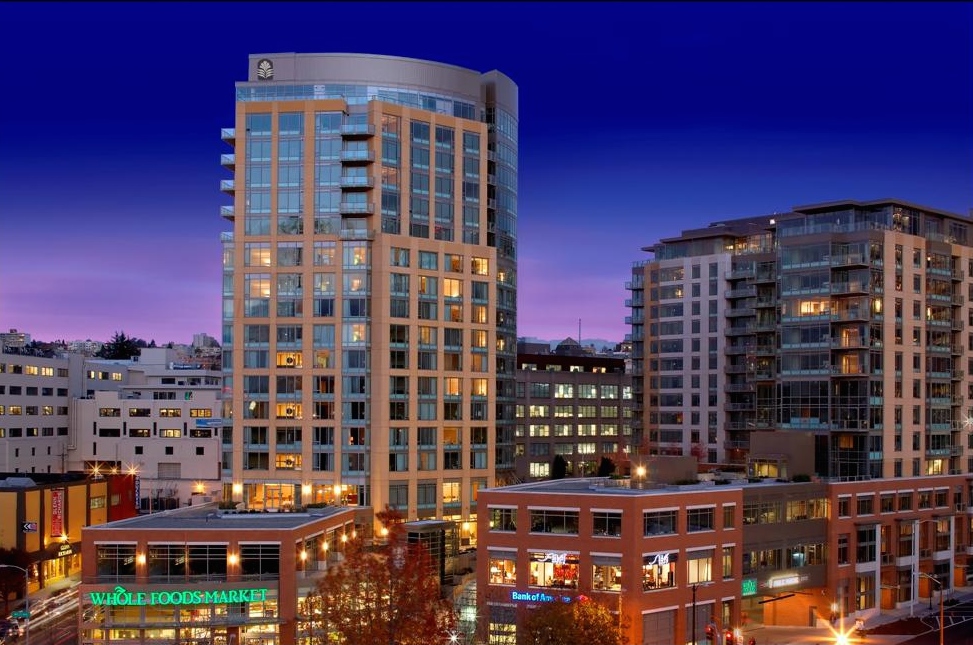

I am thrilled to bring you this week’s event calendar! Your comprehensive guide, take a peek at what’s going on! From the Friday Art Walk in downtown Issaquah and Saturday Farmer’s Market on Bainbridge Island to a weekend filled with Seafood in Ballard, here’s what’s happening around the sound:
Boomtown USA - Downtown Seattle's Growth Spurt; Denny Regrade Fills Back Up
This is significantly more than any time prior, with every real estate segment represented, including high-rise offices, residential, hotels, medical centers and major technology campuses represented by Amazon,Facebook and Google to name a few. Residential development is among the most active product segments with 10,000 housing units delivered in the past five years and another 10,000 currently under construction or in site preparation including recent land use permits issued. Nearly 19,000 additional housing units are in pre-development stages in the high-density neighborhoods that comprise downtown Seattle.
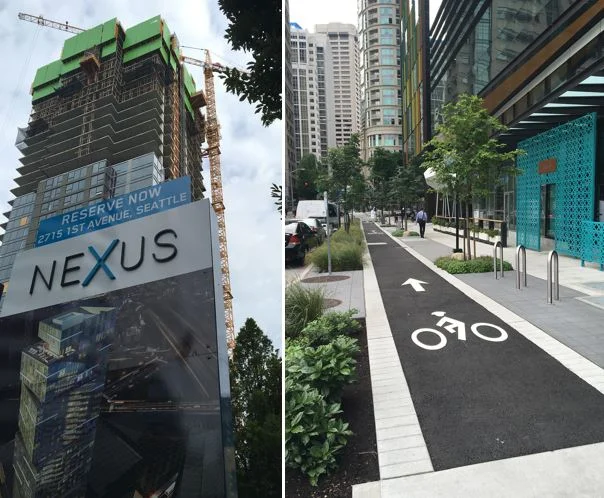
A new apartment tower rises across the street from what will be the development site for NEXUS, while entirely new neighborhoods form around major projects reshaping how and where we live in downtown Seattle.
That may sound like a lot of housing, but experts say construction is still lagging behind demand and as a result, both median home prices and rents continue to rise. The fact is that people keep moving into downtown Seattle. Conway Pedersen recently adjusted their 2016 Puget Sound job forecast up by 12,400 (35%) to total 47,900. From a macro perspective, residents of Washington enjoyed personal income growth increases of 1.5% for the first quarter of 2016 topping the rest of the nation in wealth generation. Among the 961 new construction condominiums currently in development, 786 (or 82%) have already been presold. Meanwhile, another 374 units that are soon to break ground at NEXUS have already posted 80% presale reservations. Interestingly, each of these new condominium projects are in distinct urban neighborhoods as downtown Seattle is expanding its residential footprint.
Those who move to the Seattle area are faced with a market in which the cost of renting and buying are comparable and, as of late, both increasing. The Puget Sound Business Journal reported yesterday that “if you thought the Puget Sound region’s flurry of apartment construction would drive rents down, you were wrong,” given that rents have increased over 10% in the past year alone. Average rents have risen in the downtown area by 41.7% since 2010, according to O’Conner Consulting Group, yet the median home price of condominiums have grown as much (42%) in the last year alone as of May 2016 (NWMLS), spiked in part by the new construction inventory. Homebuyers across the state are seeing increases in prices, asThe Seattle Times reported this week that “Washington’s escalating prices have sent it zooming past several other states toward the top of the list of priciest places in the nation to own a home.” The Timessays statewide home prices rose nearly 11% in the month of April when compared to last year’s numbers, representing “the biggest jump of any state in the nation for the third month in a row.” The lack of inventory paired with a strong economy has caused home prices to increase in nearly all (37 of 39) counties in Washington state year-over-year.
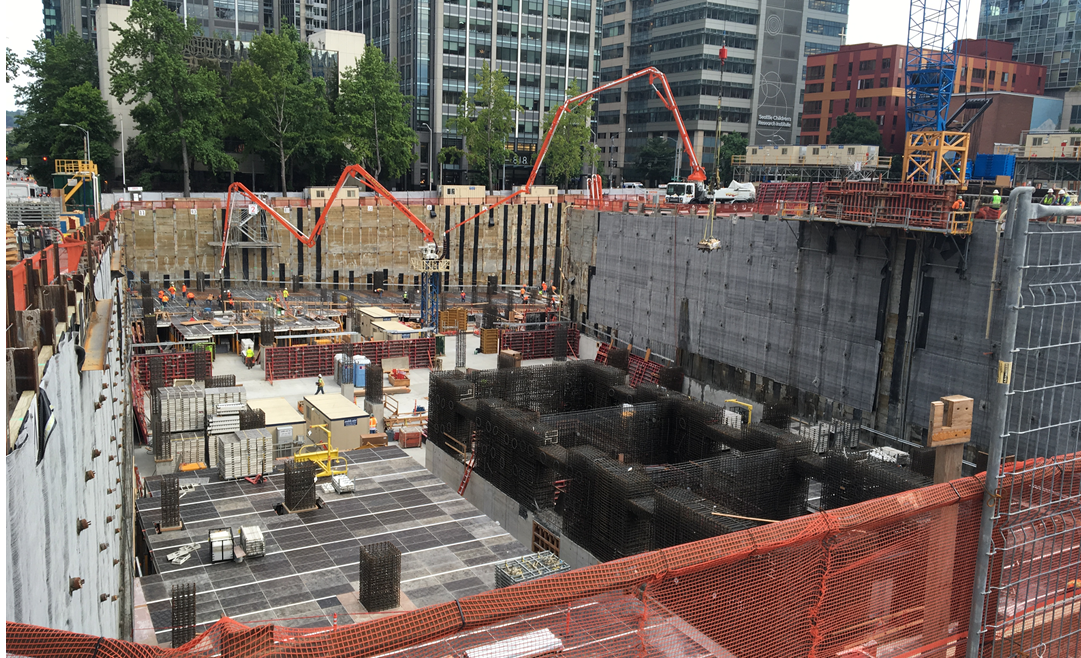
A full city block is being developed on the former Greyhound Bus Terminal, as shown here from the corner of 8th St. & Olive Wy. When complete, this project by RC Hedreen Co., will be one of the largest hotels on the West Coast.
The epicenter of this construction boom is the “Amazone” – nicknamed for the major urban campus being developed by Amazon.com. The tech and retail giant now leases and owns over 8 million SF of office space and will have over 10 million SF when planned projects are complete. This represents 14% of Seattle’s current Class A office space and will be 18% when they are finished. Amazon took up 2.6 million SF in 2015, 60% of all Class A absorption. Revenue in 2015 was $107 billion. In 2015 it grew its worldwide headcount by 50%, going from 154,000 to 231,000.
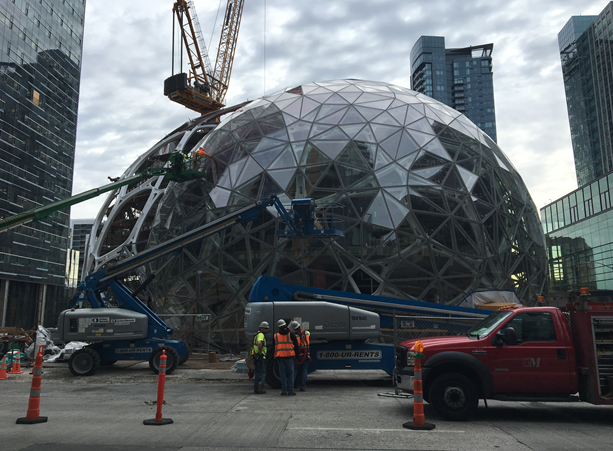
A whole new world is being created by Amazon’s urban campus in downtown Seattle.
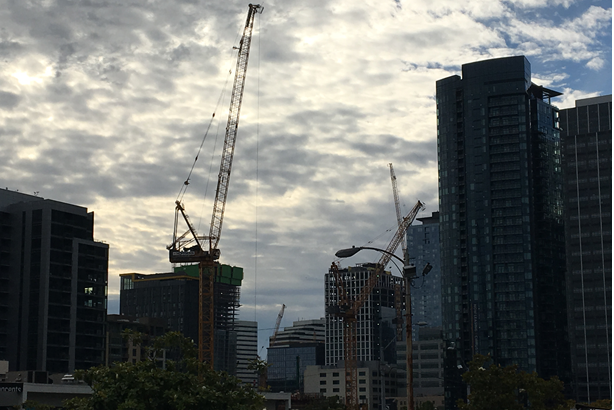
A flock of tower cranes have descended upon downtown Seattle with a record number of construction projects in motion.
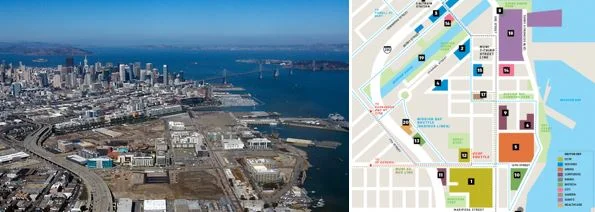
The Denny Regrade area and a northern migration of downtown Seattle is similar to the development trends of South of Market (SOMA) and Mission Bay in San Francisco. This 303-acre neighborhood on the outskirts of downtown San Francisco became the epicenter of a real estate bonanza that has rocked the Bay Area more than its 1906 earthquake. What’s different however, is Seattle is generally much more affordable, higher density and lacks the state income tax of California so it’s no wonder so many major companies, including tech firms like Google and Facebook, are opening major urban campuses in the Silicon Forest instead of the Silicon Valley.
King 5 TV News Taps Realogics Sotheby's International Realty to Highlight the "Manhattanization of Seattle"
Throughout the morning of June 22nd, reporter Ryan Takeo of King 5 TV News broadcast an interview with Dean Jones, President and CEO of Realogics Sotheby’s International Realty, regarding the “Manhattanization of Seattle” as coined by Jones a year ago in a special feature section published by the Puget Sound Business Journal. Much of the excitement centered on the recent success of NEXUS, a new condominium tower that is anchoring a burgeoning East Village neighborhood in the northeast corner of downtown Seattle. Takeo takes note of how Seattle is following in the footsteps of pricier urban markets like Vancouver, BC and San Francisco and he previously reported on the increasing logic of owning versus renting citing.
“Much of what we thought would happen, is happening – median home prices are skyrocketing, there’s a movement from apartments to condominiums and downtown Seattle has taken its place among the fastest-growing cities in the US,” says Jones, referring to his research. “It was easy to predict because of the strong market fundamentals and the fact it takes several years for this new supply to catch up to present demand. I think we’re in for a cycle where both apartment rents and condominium home values rise despite the thousands of residential units in our pipeline.”
According to research by Jones and members of the NEXUS development team, the area of downtown Seattle bound by I-5 to the East, Olive Way to the South, 5th Avenue to the West and Thomas Street to the North in South Lake Union will soon be home to more than two dozen high-rise projects comprising residential, commercial and hospitality uses. Over the next five years this neighborhood could witness the development of 10,000+ housing units (mostly apartments), two million sq. ft. of office space, 185,000 sq. ft. of retail, 1,900+ hotel rooms and residential amenities such as urban grocers, child care facilities, bars, restaurants and other service providers.
“It’s where available land, high-rise zoning and market demand converge and so it’s little surprise that this is the fastest-growing and soon-to-be among the most densely populated neighborhoods on the West Coast,” adds Jones. “It’s like a city in a city and consumers are excited about is how new it will be, led by innovative developers with a lot of synergistic uses. Parking lots and underutilized buildings will be developed into glimmering towers and it’s all within walking distance of other urban neighborhoods and hundreds of thousands of jobs.”
Michael Cannon, Sales Director for NEXUS has seen this kind of rapid development happen again and again.
“I witnessed the rebirth of False Creek and Yaletown in Vancouver, BC in the 1990’s, Belltown in Seattle in the early 2000s as well as the Marina District in San Diego a few years later,” said Cannon. “I prefer to work on vanguard projects in emerging markets like the East Village – we’re quite literally selling the future. It’s validating to look back and see what great investments these became.”
Jones agrees, recalling his role on 2200, a mixed-use development located at 2200 Westlake with Vulcan between 2005 and 2007 before much of the boom took hold in South Lake Union.
“People were wondering where that South Lake Union Streetcar was going and scratched their heads about this high-rise island surrounded by parking lots and auto dealerships on the edge of downtown Seattle,” recalls Jones. “Now look at it. Nearly every development site with the zoning envelope is in play and South Lake Union is one of the most important commercial and residential markets in the nation.”